Every job below is one we do ourselves across Durham.
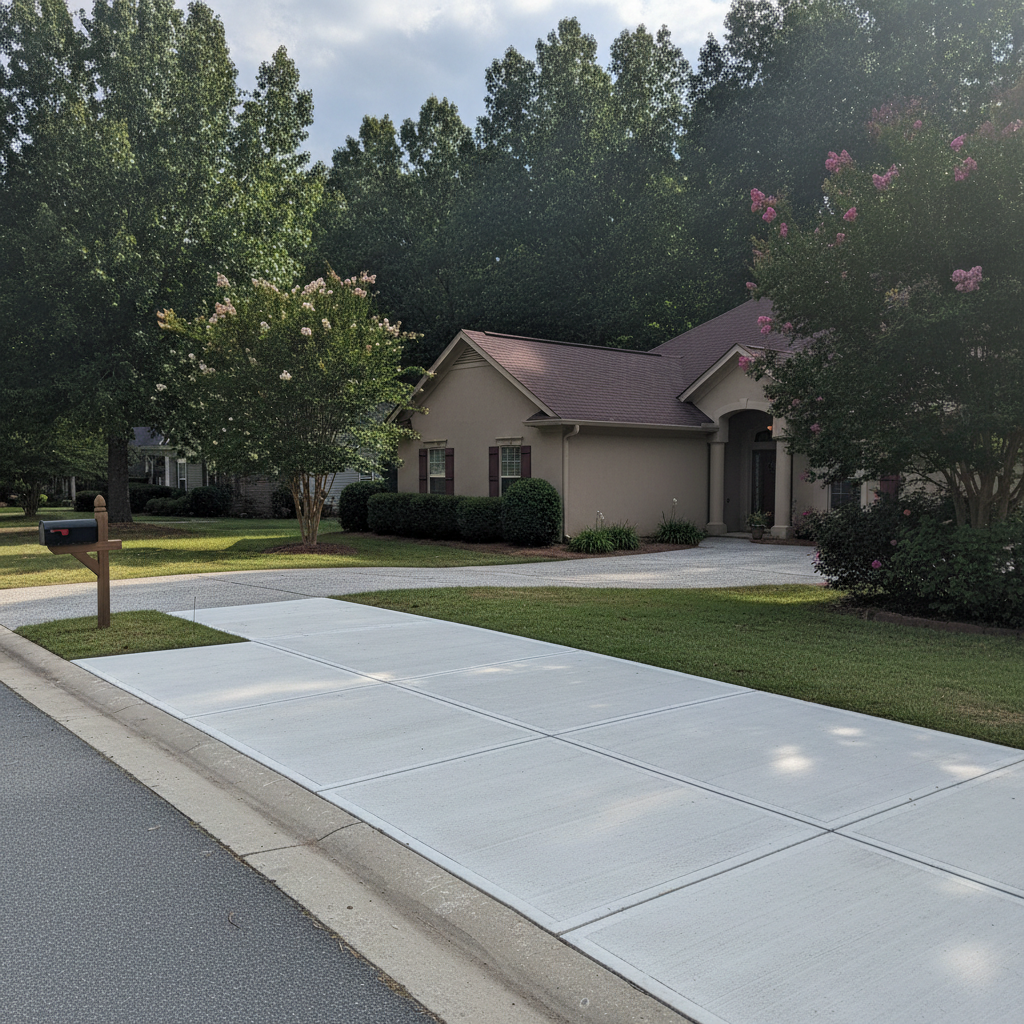
A driveway sees your full-size truck every day, not a parked car once a week. We run 4 inches of concrete over a compacted gravel base, with wire mesh or rebar depending on what the soil under it is doing. Durham clay swells when it's wet and shrinks when it dries, so we go deeper on the base here than a sandy coastal lot would ever need.
A patio doesn't carry truck loads, but it sits outside year-round, so the finish and the slope matter more. We pitch it a quarter inch per foot away from the house so water doesn't pool against your foundation. Broom finish, exposed aggregate, or a light stamp pattern, whatever matches the house.
Stamped concrete gives you the look of flagstone or brick without weeds growing between the joints. We color the slab while it's still plastic, then press in the pattern before it sets up, so the texture runs all the way through, not just on the surface. It takes more hands on pour day since the window to stamp it is short.
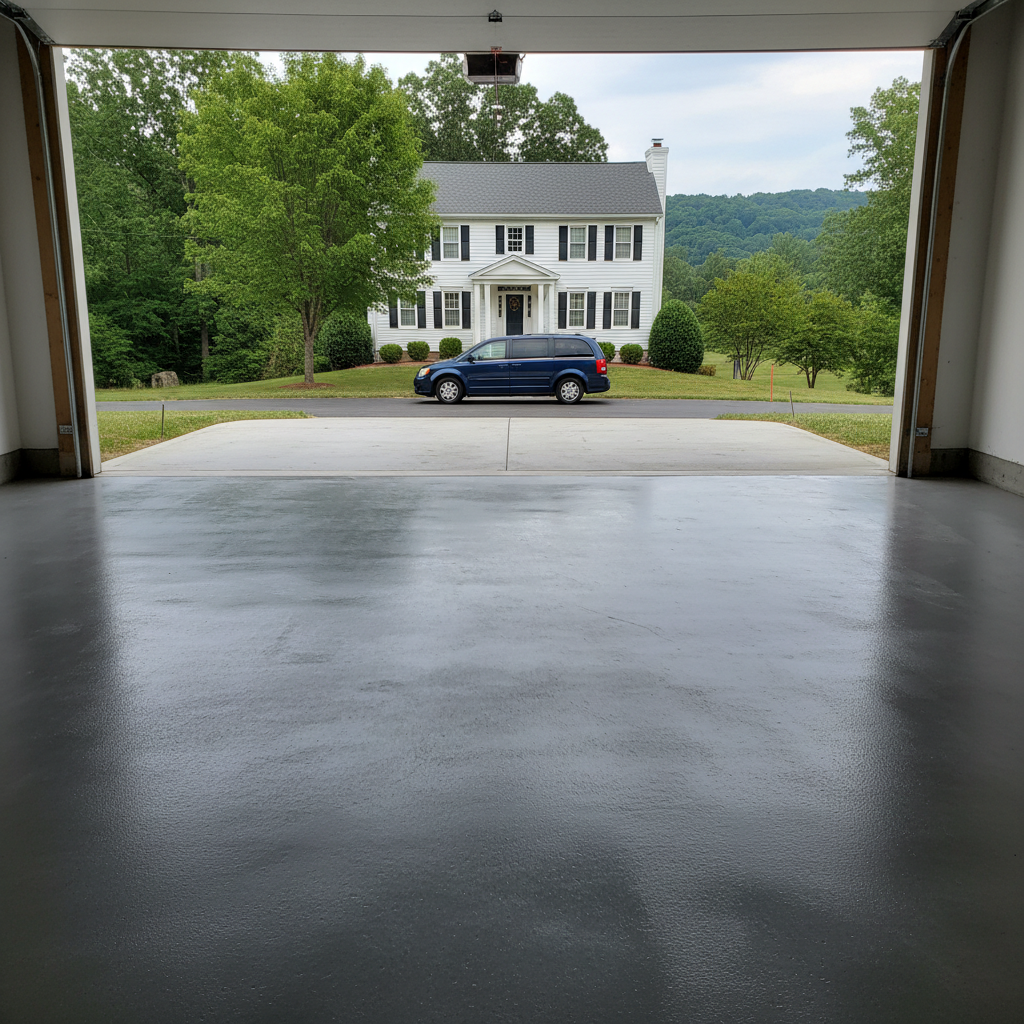
Sheds, garages, workshops, pole barns, all of it starts with a slab that's flat and square before anything gets built on top. We check the grade, lay the vapor barrier, and set rebar or mesh based on what's going on the slab. A slab under a car lift needs a different spec than one under a lawn mower.
Hairline cracks are usually cosmetic, but a crack that's moved or one edge sitting higher than the other means the slab is settling. We'll tell you straight if it's a patch job or if the section needs to come out. Mudjacking or polyurethane foam can lift a sunken slab back level without a full tear-out.
City sidewalks have their own spec and inspection, residential walkways don't, but both need a base that won't heave. We saw-cut control joints at regular intervals so the concrete cracks where we tell it to instead of wherever it wants. A finish that's too smooth gets slick in the rain, so we match it to how the walkway will get used.
Steps take abuse flat concrete never sees, the edge of every tread gets kicked, scraped and walked on at an angle. We build the forms so the rise and run stay consistent step to step, which matters more than people think until they trip on the one that's off.
If the slab underneath is still sound but the surface is pitted, scaling, or just ugly from years of deicing salt, we can resurface it instead of ripping it out. A bonded overlay goes down about an inch thick and gives you a fresh wearing surface. It won't fix a slab that's cracked clean through or settling, that one needs to come out.
Old concrete has to come out before new concrete goes in, and sometimes that's the bigger job. We saw-cut it into sections, break it up, and haul it off, rebar and all. If there's a tree root or a water line under the old slab, we'd rather find it on removal day than after the new pour.
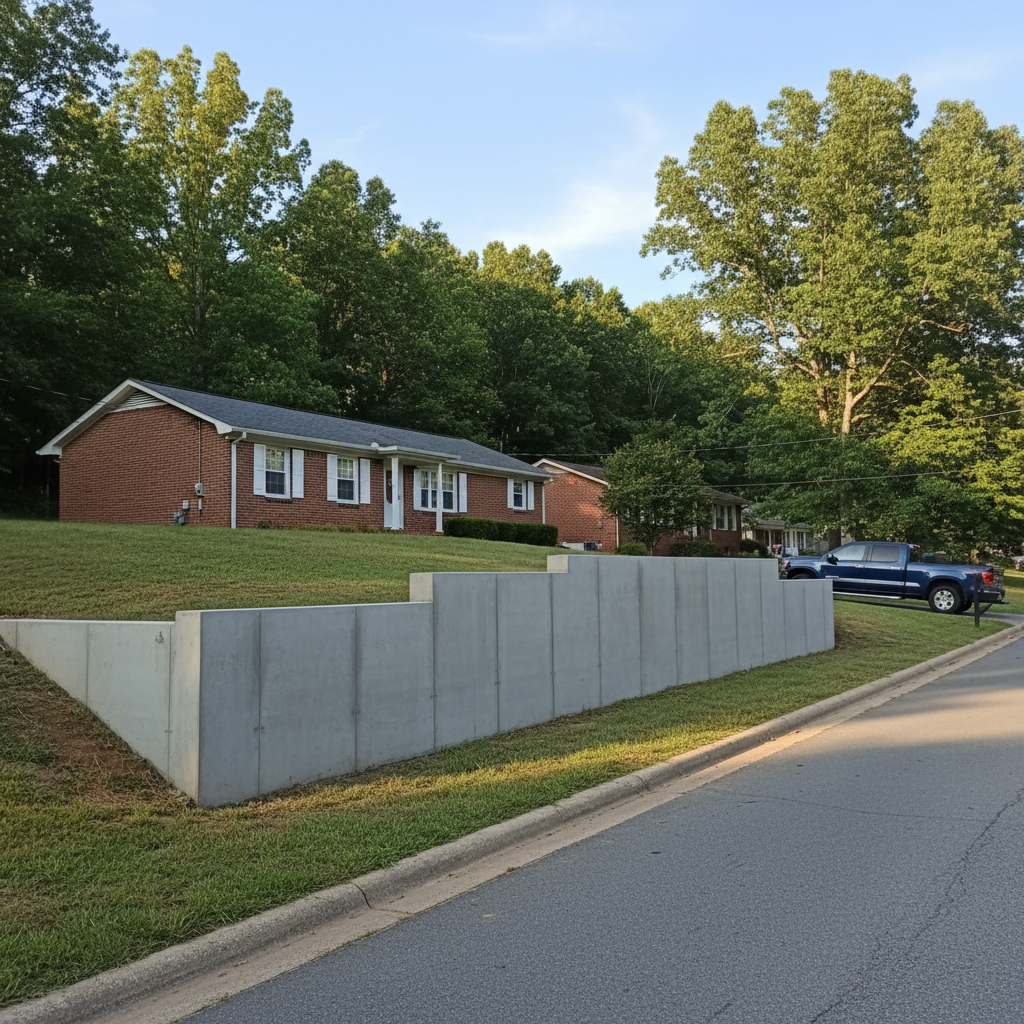
A retaining wall holds back a slope so the yard above it stays put instead of washing into the driveway. We pour the wall with drainage built in behind it, gravel backfill and weep holes, because a wall that traps water behind it is a wall that's eventually going to lean. Height and the slope above decide the footing size more than anything else.
Four steps, and no surprises in any of them.
You tell us what you want doing, we look at what is actually there, and we ask the awkward questions early.
In writing, itemised, free. If something might add cost later we flag it now rather than at the end.
Same crew throughout. We cover your floors, keep the dust down and tidy up before we leave each day.
You point out anything you are not happy with and we fix it before the invoice, not after.
These are the areas where we regularly pour and repair concrete.
Questions that come up once a concrete job is underway.
Describe the problem and we will tell you what it probably is. No obligation.